Saturday, September 16, 2017

The Crown of Life

     There is a place that I pass when I am driving to work where road crews have planted sunflowers in the median.  A few weeks ago, these flowers were all in bloom.  After a few weeks, they began to wilt and now they have been plowed over for a new planting to occur.  James tells us in James 1:9-11, that the rich man is like those flowers.  They might look glorious for a period of time, but they quickly fade away (1 Cor 7:31).

      Rather than seeking to become rich, which leads to many problems (1 Timothy 6:9), the believer should seek the crown of life.  The crown of life is the reward that God has promised to those who love him and persevere in the midst of trials (James 1:12).  The word perseveres is the word hypomeno which means to remain, to endure.  This idea began back in verses 2-5 when James said that the one who endures under trial builds endurance and character.  This is a theme that runs throughout scripture that there is a purpose behind the trials of the believer.  That God is doing something great and building character and the fruit of his spirit in the life of the believer when they resist the devil and personal lusts.

      James wants to make it clear to the reader that God is not the source of the temptation.  He clearly states, "God cannot be tempted by evil and He Himself does not tempt anyone." verse 13.  Rather, it is the lust of the person that leads to sin and sin leads to death.  Jesus said this in Matthew 15:19-20 that it is out of the heart that sins such as murder, adulteries, fornications, thefts, false witness and slanders occur.  Not a popular message today, but a true one.  It doesn't make us feel good perhaps, but we need to understand where these tendencies come from.

     Rather, God is the source of all good things.  James said it this way, 'Every good thing bestowed and every perfect gift is from above, coming down from the Father of lights, whith whome there is no variation, or shifting shadow." James 1:17  By calling God the Father of lights he is mentioning God's purity and holiness.  This is the same thing that John said in 1 John 1:5 "And this is the message we have heard from Him and announce to you, that God is light, and in Him there is no darkness at all."  This means that God not only knows how to give good gifts, but all the good gifts we have are from Him.  It also means that I can trust Him because he won't mislead me and isn't capable of giving me gifts that aren't good for me.  This is a God that I can trust in because he is pure, holy and good.

What does it mean to you that God is light and there is no variation or shifting shadow in HIm? James 1:17
Why is it important to consider that the rich man will fade away like a flower?  Where does that tell us our priorities should be?
Why is it important to remember that when we are tempted that God is not the one doing the tempting?  Is it comforting to know that God cannot be tempted by evil?

Saturday, July 22, 2017

Mark 2:14-28 Levi is called, questions about fasting and the Sabbath

Mark 2:14-28 Levi is called, questions about fasting and the Sabbath

Vs.14-17- Jesus calls Matthew or Levi to follow him. This is also in Matthew 9:9-13 and Luke 5:27-32. The word "follow" is akoloutheo means to follow one who precedes or it can mean to accompany to join as a disciple. This dinner in Luke account is called a reception. The tax gatherers and sinners is denoting that these were unrepentant sinners who were invited. Jesus said in vs.17 that he came to call or invite the sinner not the healthy. The word “to call” vs.17 is kaleo or to invite, to call by name. When Matthew got up from the tax booth he left everything else behind to follow him and never looked back.  Isn't it interesting how sinners felt comfortable and even loved in the presence of Jesus.  How often is that the case in our churches today that people feel loved and accepted?

Vs.18-22- Jesus and his disciples were walking through a grain field and John’s disciples and the Pharisees wanted to know why the disciples didn’t fast. Jesus compares himself to the bridegroom and says that while the bridegroom is with them they don’t fast, but they will one day. The bride is the church. This same section is in Luke 5:33-39. The Pharisees typically fasted twice a week Luke 18:12. One day Jesus is coming back for his bride. Revelations 19:7-9 for the marriage supper of the Lamb.

Vs.23-28 This is also in Matthew 12:1-8. Jesus declares his lordship over the Sabbath and says that the Sabbath was created for man’s benefit. Jesus told them according to version in Matthew that he desires compassion and not sacrifice and that they were condemning the innocent. The Pharisees had a blind spot to compassion when it came to following the law. A similar thing is said in Hosea 6:6. Could it be that following the law still gives people the same blind spot. Jesus said he didn't come to call the self sufficient but the sinner who has need of him.

Vs.21 Jesus was saying it is not wise to try and patch the old system with the new. That the two are not compatible.

The reference to the consecrated bread is 1 Samuel 21:1-6 where David is running from Saul and takes the consecrated bread and Goliath’s sword.

Sunday, July 16, 2017

Jesus calls his first disciples Mark 1:14-20


     After Jesus had completed his time of temptation in the wilderness, he was ready to start his public ministry.  His preaching ministry begins with these words in Mark 1:15

  'The time is fulfilled, and the kingdom of God is at hand; repent and believe in the gospel"

    In my studies, I thought about what it meant for Jesus to say that the time is fulfilled.  The word fulfilled is pleroo or it means to make full, complete.  It carries with it that this is the time when the fulfillment of all the promises of the prophets will be completed.  Jesus was saying that in his coming he is the fulfillment of what the prophets had talked about.

    So, Jesus begins to build his team of disciples that he will live with and teach closely over the next three years.  And it says that he was in Galilee sometime after John the Baptist had been taken into custody and he saw Simon and Andrew and James and John fishing.  He calls to them and tells them they will become fishers of men and their response is to immediately leave what they have and go to him.  I wish I would always be that obedient to the calling God has for me.  For all of the grief that Peter takes for betraying him here he is immediately faithful to leave his prosperous fishing business and follow without hesitation.

    Luke adds to this story in a way that Matthew and Mark do not, by adding that prior to this Jesus had asked to borrow Peter's boat to sit in while he was preaching Luke 5:1-11.  After he had completed his message he told Peter to let down their nets for a caught.  This was odd because with casting nets the nets would normally be cast at night since the fish would come to the top of the water at that time and go lower when it was daylight.  Peter was already tired and frustrated and yet he was also obedient.  To him, to do fishing now simply didn't make sense.  In verse 5 he protests, "Master, we worked hard all ngiht and caught nothing, but at Your bidding I will let down the nets."

    The result is that the net start to break due to the large amount of fish they haul in.  To the point, that Peter signals James and John to come help them.  Peter is astonished.  He realizes that nothing has changed except that now Jesus is there.  His response is "Depart from me, for I am a sinful man, O Lord."  Peter realizes that while he did Jesus bidding it was with a heart that didn't believe it would matter and that they were all wasting their time.  But, now Peter is wiling to repent of his poor attitude and doesn't even feel worthy of being with him.

   It reminds me of seasons in my life when God has worked despite me instead of because of me.  It also shows me that even when we are reluctant to his will the simple act of obedience is rewarded.  God knows our weaknesses and our struggles and it is transparent before him.  Psalm 139:3 says,

   "Thou dost scrutinize my path and my lying down, and art intimately acquainted with all my ways."

  So, Jesus knew what was in Peter when he called him and was not surprised by Peter's sinful attitudes or actions.  Neither is he surprised or caught off guard by ours.  He simply calls us to repent and believe in Him, to put our trust in Him.  These type of situations where there is little hope and then the boat is full shows us that God can provide at all times and he is completely trustworthy.

Thursday, July 6, 2017

Like a Oak Tree Romans 5:3-5

    When I was first married, we lived next store to a couple that had large pin oak trees in their backyard.  These trees were a hundred or more years old (not the one in the picture).  It made it so that they couldn't grow grass in their backyard because it got very little sun.  Some of those trees may have been around when Thomas Jefferson was alive.  It always amazes me when I look at a large tree and see its massive root system.

    You don't really see and can't tell that a large tree is still growing.  it is growing though and continually strengthening itself over time.  The roots are slowly spreading out to support its growing size and strength.  You can tell though when a storm comes and instead of breaking the tree moves and bends and bears up under the power of a storm.  I think that is true in a christian's life as well, the best way to see the growth is that it has good roots and it has been through some storms.

    Paul spoke alot about the storms of life because he knew that they would come to all of us.  But, he also knew that God could use them to strengthen us.  In Romans 5:3-5 he says "Not only so, but we also rejoice in our sufferings, because we know that suffering produces perseverance; perseverance; perseverance, character; and character, hope.  And hope does not disappoint us, because God has poured out his love into our hearts by the Holy Spirit, whom he has given us."  This passage tells us that God is up to something in our adversity.  He is attempting to make us stronger through the adversity and will bring something good out of it.

    I've had seasons in my life where it didn't seem like much was happening.  I could see no great growth going on.  Much like trying to watch a tree or grass grow it is hard to see in the minute to minutes times of life.  But, then an adversity will come along (as it always does) and it tests the root system.  These tests can come in all forms of troubles and anxiety of life.  Mine will not be the same as yours as there are things that bother me that might not bother someone else.  The point is, that God is up to something in the middle of it.  We can do our part by putting down a good root system during those times when we can study, pray, read and witness and worship.

    It reminds me of the story about Jesus being tempted by the devil.  Of course, Jesus was God in the flesh and knew scripture because it was His Father's Words.  But, he had also grown up in the synagogue as a boy being taken there by Joseph and Mary.  He had hidden God's word in his heart and when there was a trial it was there to be used to defeat the devil.  Psalm 119:105 says, "Your word is a lamp to my feet and a light to my path."  By spending time in God's word it helps us to have light during those dark times in our life when trouble comes.  It always amazes me about how ignorant people are about the Bible and what it says.  Your job as a believer is to get into the word, to study it, to read it to live it, so that you stay out of situations you have no business being in.  But, also it helps guide you during those times when trouble is unavoidable.   I want to be more like those trees in my neighbors backyard that stood strong when storms came.

Sunday, June 18, 2017

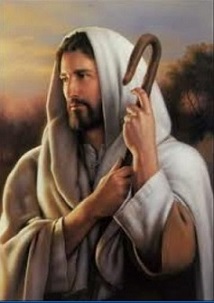
Jesus the Gate and the Shepherd John 10:1-18

"I am the good shepherd; I know my sheep and my sheep know me- just as the Father knows me and I know the Father- and I lay down my life for the sheep."  John 10:14-15

   I want to outline for you five points that I see in the verses of John 10:1-18.  The first thing we should note is that this conversation in chapter 10 is related to what happened before in chapter 9.  Jesus heals a man born blind and Jesus refers to spiritual blindness.  The spiritual blindness and thief and robbers are the Pharisees from chapter 9.  In contrast, Jesus refers to himself as the true gate and Shepherd.

   First, Jesus has a legitimate right to enter by the gate unlike the thief and robber.  The doorkeeper is a porter who has the keys.  The porter opens up the sheep gate  in order for the shepherd to lead the sheep out to pasture.  The thief wouldn't have access to the doorkeeper and would have to break in through illegitimate means.  The thief has the intention of using the sheep for his or her own needs.  The Bible makes it clear that there are many false shepherds today who take advantage Jer 23:2; Jer 50:6; Eze 34:2-3.

   Second, the sheep know the shepherd's voice.  The sheep will run from a stranger, but there is an intimate understanding and knowledge that the sheep have of the shepherd.  Jesus is referred in many places in the Old Testament as the shepherd.  Isaiah 40:11; Ezek 34:23; Zech 13:7; Heb 13:20; 1 Peter 5:4.  The voice that is referred to here means a sound or voice that the sheep identified with their owner.  Jesus said he also knows his sheep by name.  By name implies intimate knowledge or to know the essence of a person.  God knows your name and knows you better than you even know yourself.

    Third, Jesus describes himself as the gate which leads to salvation (green pasture) full and abundant life John 10:7,9,10.  He isn't one of many gates, but only one.  The benefit of going through this gate is that it leads to safety, prosperity and an abundant life.  Jesus told his followers in Matthew 7:13-14 "Enter through the narrow gate.  For wide is the gate and broad is the road that leads to destruction, and many enter through it.  But small is the gate and narrow the road that leads to life, and only a few find it."

    Fourth, the good shepherd lays down his own life for the sheep.  He does this because he love the sheep.  His does this as a part of his own free choice.  In contrast, the thief and robber runs when trouble comes because they don't care for the sheep. 

    Fifth, the thief or robber is someone who enters by some other way than the gate.  In Acts 20:29-30 Paul tells the church that he knows that soon after he leaves that savage wolves will come and some would arise even out of the church and distort the truth.  This happened in both Galatia and Colossae and were the reason that Paul wrote those letters.  He refers to false brothers in Galatians 2:4 who infilitrated their ranks to spy on their freedom and to seek to make them slaves again.  The sheep should be aware that these false breathren still exist today and take advantage of the sheep if they can.

See also J.Vernon McGee's sermon about this passage
https://www.blueletterbible.org/audio_video/popPlayer.cfm?id=7715&rel=mcgee_j_vernon/Jhn

Commentary on this passage
David Guzik https://www.blueletterbible.org/Comm/guzik_david/StudyGuide_Jhn/Jhn_10.cfm?a=1007001

Matthew Henry https://www.blueletterbible.org/Comm/mhc/Jhn/Jhn_010.cfm?a=1007001

Chuck Missler https://www.blueletterbible.org/audio_video/missler_chuck/Jhn/John_Vintage.cfm#John_10_I_Am_the_Door

Friday, June 9, 2017

Hope in the middle of chaos

"Because of the Lord's great love we are not consumed, for his compassions never fail.  They are new every morning; great is Thy faithfulness."  Lamentations 3:22-23, NIV

    Jeremiah is often called the "weeping prophet" because of how much he lamented during his prophetic time period.  He was often ridiculed and laughed at, jailed and mistreated because of the Word of God that he preached to the people.  His prophetic message ranges from a period of around 626-629 B.C. until some time after Jerusalem is destroyed around 586 B.C.   So, he had a long period of trial.  During this time, because Jeremiah lived among the people even when in captivity when they suffered he also suffered.  It was bad enough that in Lamentations he makes mention of women cooking their own children due to starvation.

      Jeremiah didn't have a very hopefully message.  He lived during a time period when the Babylonians were rising in power.  God ended up using the Babylonians to inflict judgment upon Judah and Jerusalem due to their idol worship and numerous other sins.  The people had taken upon themselves to worship the sun, moon and stars and many of the pagan gods around them.  This included at times human sacrifice to pagan gods and sexual immorality.

      Jeremiah was not viewed a success because of his many converts.  In fact, of those who believed in him we know of very few except for a faithful scribe named Baruch who wrote and helped Jeremiah spread the message he was preaching.  Other than that, he left Jerusalem as a captive of those who remained and went down to Egypt even though he was telling the people not to go there.

      It makes it all the more remarkable that Jeremiah has these words of hope in the middle of a oracle dedicated to lamentation over the people's sins.  Jeremiah understood that it wasn't because of God's unfaithfulness that the people experienced all of their heartache and pain.  In fact, for almost 40 years Jeremiah had be trying to warn the people to repent.  Jeremiah understood that God is faithful when man is not.  He says in jeremiah 3:22-25

    "Because of the Lord's great love we are not consumed, for his compassions never fail.  They are new every morning; great is Thy faithfulness.  I say to myself, "The Lord is my portion; therefore I will wait for him."  The Lord is good t othose whose hope is in him, to the one who seeks him." Lamentations 3:22-25, NIV

     This is a reminder that God is still good and his desire is to show compassion and love to others.  His discipline is proof of his love.  His patience with the people waiting over 40 years for them to repent was an act of love.  God didn't destroy all the people overnight like he could have.  It was 606 B.C when Jerusalem was first destroyed and the king and princes taken captive.  It was further attacked again around 597 B.C and then later burned to the ground 586 B.C.  God gave them time to repent and turn back to him because of his love.  Because of his holiness, he couldn't ignore the sins the people were committing.

   God called out to the people in Jeremiah 3:12, "Return, faithless Israel, declares the Lord, I will frown on you no longer, for I am merciful, declares the Lord, I will not be angry forever. Only acknowledge your guilt you have rebelled against the Lord your God, you have scattered your favors to foreign gods under every spreading tree and have not obeyed me, declares the Lord."  The Lord asks them to consider how it has gone for them since they rebelled and to realize that it is in their best interest to return to him.  God says in Jeremiah 2:19b "Consider then a realize how evil and bitter it is for you when you forsake the Lord your God and have no awe of me."

    I believe this is the same message that the church should heed today.  That in many cases people who claim to be Christians are worshipping other things in their hearts and minds and not completely in love with the Lord and following after him with their whole heart.  He would say the same thing to us today to consider and realize that things are better when we follow the Lord with all our hearts.

Friday, June 2, 2017

Verses about God's love

The Attributes of God: Love

(part of this list is taken from web site: https://www.josh.org/resources/spiritual-growth/attributes-of-god/? A free Bible study site by Josh McDowell)
  • as a father, God corrects His beloved children (Prov. 3:12) Discipline is proof of his love.  Discipline - yakach, reproves, corrects. In Hebrews 12:11 it says that the displine of God is painful, but produces a harvest of righteousness and peace to those who are willing to be trained by it.  Similiar to the idea of in Romans 5:3-5 where it says that suffering produces perseverance, endurance and character and eventually builds hope.
  • Believers should imitate God’s universal love (Matt. 5:44-45) this comes right before where Jesus says to love your enemies and pray for those who persecute you.  Then he gives the example of God who sends his rain upon the good and the evil.
  • eternal plans are motivated by His love (Eph. 1:4-5)  God chose us in Him before the world was even created.  His motivation was love to adopt us as sons through Jesus Christ.
  • God loves and preserves His godly people (Ps. 37:28) The Lord loves those who are just and won’t forsake those who are faithful.  Love is the word ‘ahab which is the word used to describe God’s love for people. 
  • God loves His people, even when they are faithless (Hos. 3:1) God tells Hosea to go love his wife even though she is an adulteress just as God loves Israel even though Israel was not faithful and had turned to other gods.
  • God deserves thanks because of His perpetual love (Ps. 100:5) says that the Lord is good and his love is something that endures forever.  This word for love is checed which can be translated lovingkindness.  It can mean goodness, faithfulness, kindness. 
  • God loved the world enough to send His Son to die (John 3:16) God’s love motivated him to give His only son that the one who believes in Him would not perish but have eternal life
  • God loves those who love His Son (and obey Him) (John 14:21)  Jesus says the one who loves him is the one who has his commands and obeys them.   The Father will also love this person and Jesus promises to show himself to this person.
  • His love is poured into believers’ hearts (Rom. 5:5)  God has poured out his love to the believer through the Holy Spirit.
  • God is love, and those who know God love others (I John 4:7-8, 20-21)  Love is from God and the person who loves has been born of God and this is evidence that he knows Him because God is love.  True is is not that we loved God first, but rather that he loved us and sent Jesus to be a substitutionary sacrifice for our sins and make atonement for us.
  • nothing can separate the believer from His love (Rom. 8:38-39) Through the one who  loves us we are more than conquerors and nothing can separate us from His love.  Paul goes on to mention many things that cannot separate us like life and death, angels and demons, present nor future, nothing else in all creation because love is greater than all of these.
  • to love enemies and the wicked is to be like God (Luke 6:35)- similar to what was said in Matthew 5:44-45 that we are to love our enemies just as God is kind to those who are good and those who are evil.
  • (Romans 13:10) says that love is the fulfillment of the law.
  • (John 15:9)  Jesus repeatedly tells them to love each other as he has loved them.  He says that if they obey his commands they will remain in his love. Jesus love for the believer is similar to the Father’s love for the Son. 


Psalm 32:5-7 God is Ready and Eager to Forgive

  Psalm 32:3-7 3 When I kept silence, my bones waxed old through my roaring all the day long. 4 For day and night thy hand was heavy upon me...