Sunday, March 10, 2013

the least of these

   Tonight, I spoke for a few minutes at Sheets Memorial Baptist Church in Lexington, NC.  I shared with them about the foster care program where I help license foster homes.  I shared a passage in Matthew 25 that I first really noticed back in 1997.   In Matthew 2:3-46, Jesus is telling his disciples what will happen when Jesus returns.  It says that he will separate the people like sheep being separated from goats.  The sheep will be on his right and the goats on his left.

    It says that he sys to the sheep, "Come, you who are blessed of My Father, inherit the kingdom prepared for you from the foundation of the world.  For I was hungry and you gave Me something to eat, I was thirsty and you gave Me drink; I was a stranger, and you invited Me in; naked and you clothed Me; I was sick, and you visited me; I was in prison, and YOu came to Me."  The righteous ask Jesus when they did that for him and he responded "to the extent that you did it to one of these brothers of Mine; even the least of them, you did it to Me." 

     I shared with them how sometimes those who Jesus described as the "least of these" are people who you may not like, they may not be gracious or grateful for the help you provide.  They may not be the most attractive or well educated.  You may find that you don't like them very much.  I know I have felt that way sometimes about people I have helped in mental health.  But, Jesus said when we do it for the least of these it is like we are doing it for him.

      It may appear then by saying this that we are saying that salvation is by works.  The passage doesn't say that, but it does say that works are important.  James talked about this in his little book when he said "But are you willing to recognize you foolish fellow; that faith without works is useless." James 2:20.  In other words, if you have real faith then it will demonstrate itself in real ways.  If you don't have faith then it will not bear fruit.  Recognize in the passage I mentioned earlier in Matthew that those who were condemned were very surprised that they were condemned.  They thought that they had been good enough.  But, Jesus accused them of turning away from those in need and by doing so neglecting him also.

      In Ephesians 2:10, it says, "for we are HIs workmanship, creatd in Christ Jesus for good works, which God prepared beforehand, that we should walk in them."  What this passage says to me is that God has given us tasks to do to further His kingdom and to please and honor Him.  We each have different gifts, personalities and strengths, but God has singled out works that he wants you to do.  Not doing them, is demonstrating a lack of faith.  Walking in them, pleases him and bears fruit for him. 

     God has given each of us tasks he wants us to do.  These tasks may require for us to walk by faith and to trust him.  By taking that step of faith and doing what he commanded, we honor Him and bear fruit for eternity.  These tasks are unique to who we are and to who he has made us to be.  It incorporates our gifts, personalities and the passions and calling he has given us.  None of us are called to the sidelines, to sit and soak and not to do the Father's work.  All of us are called to put our hand to the plow and to be busy at our task until he comes again.

Tuesday, March 5, 2013

some thoughts abot forgiveness

    This last week, I was contemplating the meaning of forigiveness.  What forgiveness truly is and what it is not. How do I know when I have forgiven and what is my obligation as a christian.  I noticed that forgiveness is related in scripture to how God has forgiven us.  Jesus tells a parable about a king who wished to settle debts with slaves.  He calls a slave and forgives a large debt.  The slave responds by going out into the community and finding a man who owes him about 3.5 months wages.  He tries to choke the man and throws him in prison.  The king is angry when he finds out about this lack of forgiveness and throws the man in prison.  God uses this parable to say to us that he expects us to forgive each other because he has forgiven us.

      This is a good way to think about forgiveness.  That it must  be done with the humility that however much others have offended us that we have offended God much more.  If God, who didn't need to forgive us was willing to go to that length then we should forgive others.  Forgiveness is not minimizing nor is excusing what others have done.  It doesn't say that it doesn't matter.  Nor, does it mean I treat the person like nothing happened.  I can forgive a snake for biting me, but I don't need to stick my hand back into his nest.

      I will admit that I am struggling in this area.  I have had several people, who I personally don't like, offend me.  I have a hard time letting it go.  Perhaps it is my pride that doesn't want to let go.  It feels in some ways like I give up power over the situation when I forgive.  This is  especially true when the other person is unwilling to acknowledge the hurt they have caused.  Holding on to it and nursing it in some ways makes me feel like someone is acknowledging it.  But, it also seems the longer you hold on to unforgiveness the harder it is to let go.  That thing takes roots and starts to make a home of bitterness and doesn't want to let go easy.

      And I think that is one of the reasons it is so important to let it go and give it to God.  Because when it does take root, the bitterness is something that saps the strength and joy out of the one holding it.  Like a weed that chokes the very life out of its owner.  Like a vine that steals all the nourishment for the soul.  God gives us these commands for our own sake.  Because unforgiveness is like a poison and dangerous to play with.  You think your holding on to it and then it turns and bites you. 

    I also think I need to acknowledge here that it is also difficult for me to forgive myself at times.  I think about stupid things that I have done.  We have to realize that none of us is perfect and we all make mistakes.  Nobody except Jesus lived a life where no mistakes or sins were made.  I am thankful that God has told me over and over that if I come to him he is faithful and just to forgive me of my sins and cleanse me from all unrighteousness (1 John 1:9).  Jesus was even able to forgive those who crucified him on the cross.

Monday, February 18, 2013

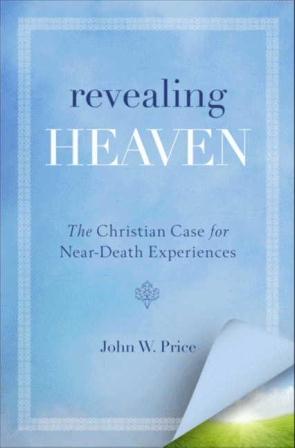
A Book Review: Revealing Heaven

     Recently, I had the chance to read the new book by John W. Price called "Revealing Heaven".   Rev. Price is an Episcopal priest who wrote this book in response to his experience of interviewing persons who died and were revived.  This is a very easy to read, short book.  Rev. Price makes it interesting to read and is clearly passionate about letting people know about what others have told him about their experiences of going to heaven and coming back.  There are many things that I like about this book.  There are also some serious theological concerns that I have about what Rev. Price says.

    One of the things that I like about this book is that Rev.Price really calls on people to consider how their actions and words affect others.  He talks about how those who go to heaven have a chance to really feel and experience the joy and pain that they cause others.  This is really something to ponder.  He says that one of the things that many had in common was that they had a life review.  This seems consistent with what the Bible says about how each person must stand before God and give an account of their life.  How much more careful we would be if we realized how careless words and actions hurt others.

       The other thing that I like about this book is that Rev. Price emphasizes the love of God.  He really talks about and wants to comfort others that when someone dies they go to a better place.  You hear this desire to alleviate fears in his book throughout and that is commendable.  It is true that God is love and that heaven is for real.  It is interesting to hear him talk about how this was not something he gave a lot of thought about early on in his ministry.

       One of the interesting stories that John tells is when he goes back to his seminary and runs into some seminary professors.  He tells them about his experiences of talking to others who died and came back.  These seminary professors reject the concept of heaven completely.  One wonders what type of liberal school he went to and why these professors would be allowed to teach others if they don't believe in a heaven.  Yet, Rev. Price states that this was not a focus in the early part of his ministry.  He was more interested in the here and now.

        One big concern that I have is that Rev.Price seems to say that it truly doesn't matter if a person is Jewish, Hindu, Buddhist or Muslim or Christian.  The important thing isn't following Jesus or believing in him.  It isn't really even that important according to him to go to church.  What is important is that we love other people.  In saying this, he lowers the standards for salvation to simply being good instead of faith in Christ.  Christ doesn't become the way, the truth and the life, but he is only one of many ways.

       The author seems to acknowledge this concern and writes about this for about 4 pages.  He tries to justify this belief by equating Jesus with love.  According to his statements, if we simply love others then by our actions we believe in Jesus.  But, the problem with that is that Jesus is much more than love.  While God is love, he is also more than love.  God is more than a concept, but is a person.  He made exclusive statements about his nature, which John ignores in this book for the most part.

       I understand the desire to not want anyone to go to hell or to think they are going to hell.  I wish that John was right.  Interestingly, John says that when pastors have this experience and come back and tell this to their congregations that the congregations end up dying.  He seems to suggest this is because they are no longer harsh or judgmental.  But, the truth is, that if Jesus is only one of many ways, then it doesn't matter that much if I come to church or not. 

       Jesus didn't make these statements about himself.  In lowering the standard of salvation, Dr.Price actually waters down the gospel to alleviate fear.  But, the Bible declares that the fear of God is the beginning of understanding.  Jesus claimed that the way to heaven is through the narrow gate and he said few find it.  John Price said that the way to heaven is a highway and hell is only for really mean people. 

       We must be very careful about doctrine that compromises what God says.  It is easy enough to want God to say something.  It is also easy to equate experience over the Word.  In effect, that is what John does by believing the words of those who apparently died over what the Bible says.  The bible doesn't imform his experience, but his experience trumps the Bible.  This is dangerous and wrong.

       This is a deeply flawed book which elevates experience over what the Bible says.  Unfortunately, it is a popular belief today.  To claim that what Jesus said was true, means that others in the world will judge you as harsh, judgmental and a bigot.  Uncompromising to the Word, you will be viewed as close minded and mean.  But, the truth is that we are not called to compromise the word to alleviate fears.  Sometimes fear can be good.  Especially if it leads you to consider who the person of Jesus is and what your response to His sacrificial death is.

Sunday, February 17, 2013

Lessons from Leviticus

    I realize that as I write this title with the word "Leviticus" in it that it doesn't exactly thrill the heart.  I told some people about a week ago that reading through Leviticus through Deuteronomy was my least favorite portion of scripture.  I am halfway through leviticus and my opinion hasn't changed any.  It is about as fun as having your teeth pulled without pain medicine to read all about the sacrifices and leprosy and blood and gore.  So, what possible lessons could you learn as a New Testament believer from this book of the law?

    As I was reading through the sacrifices, I thought to myself if this was the requirement that the Lord still had today would many of us still want to be believers.  What would the animals rights advocates think of those who brought bulls, goats and lambs to their place of worship and killed them.  It makes it sound like God is a little blood thirsty here.  Is there really enough animals on all the earth to make us truly clean before God?

     I hit a coyote on the way home from work this last week.  I'm not a big fan of coyotes since they tend to prey on cats and dogs and I have four cats.  This happened about 2 miles from my house.  Even though I don't like coyotes, I felt a little bad about hitting him.  In that moment before I hit him I could see he was running for all he was worth for the side of the road.  Unfortunately for him, he misjudged it by a second or two and now he is dead.  Nobody is going to much care about one coyote, but what about hundreds of sheep, goats and bulls that had to be sacrifices annually according to Old Testament law?  That fire literally never went out.  How many of us would want to go through the strict requirements that this law holds for us?

      One thing that I think this book teaches us is that there are consequences to sin.  When you brought your sacrifice to the temple you had to place your hands on its head and then it was slaughtered.  The animal was taking the punishment that you deserved for your sin.  It was a regular reminded that sin has a big price.  And we see that still today in the sins that people commit and the choices that people make.  Sin always has consequences to it.   It is a very ugly thing and yet people tend to minimize many sins today.

       The other thing is emphasized in Leviticus 11:44-45.  God was trying to teach the people about himself.  He was telling the people that he is holy.  He was teaching that in order to approach God one must follow His words and treat him as holy.  Aaron got a very personal lesson about this through the sins of his sons.  In Leviticus 10 it says that Nadab and Abihu decided they would offer up "strange fire before the Lord".  The result of this was that fire came out from the Lord and destroyed them.  Moses told Aaron that,

 "By those who come near Me I will be treated as holy; And before all the people I will be honored." 

      Sounds harsh to many of us, but God was telling them and us that God is not tolerant of sin.  We cannot come to him any way that we wish.  That God takes obedience to His Word very seriously.

       I am grateful that we still don't live in the Old Testament times where the sacrifice of bulls and goats are necessary.   I am also glad that this sin debt that was impossible for the blood of bulls and goats to take away has been permanently paid for.  Now, with God, I don't have to worry about sacrifices such as these.  I do though still need to take obedience to his Word seriously.  I still need to realize that God takes sin seriously and that he wants me to walk in obedience to his commands.

Sunday, February 10, 2013

Aaron and the golden calf

     I am reading through the Bible chronologically this year and today's passage took me to Exodus 31-33.  Moses has been on top of the mountain for a long time, so they ask Aaron to make a idol for them.  It appears they are concerned that they have no leader now and possibly Moses has died.  This happens despite the fact that only back in Exodus 20:19 the people told Moses "Speak to us yourself and we will listen; but let not God speak to us, lest we die."
     What is surprising is how fast the people become corrupt and walk away from God.  But, even more surprising is how fast Aaron abandons God also.  After all, they have evidence that God is with them through the cloud during the day and the pillar of fire at night.  They had this experience of hearing God's thunder and seeing the presence of God.  You would think that if any group would be obedient, after walking on the bottom of the Red Sea on dry land, then this group would be. 
     But, when you look at Aaron's response to the people, he joins with them quickly.  He requests of them that they remove the gold earrings and give them to him.  He works to create a mold and makes an idol of gold of a calf.  This is imitating the natioins that were around Egypt at that time.  Then, it says the people rose up to play.  This doesn't mean tic tac toe.  This phrase implies that their behavior became sexualized much like the pagan nations around them.  Things had gotten completed chaotic and out of hand.
      It makes God mad enough that he tells Moses he is going to start over with just Moses.  God's wrath is getting ready to boil over completely and destroy them.  What is interesting is that we see such a huge contrast between Moses and Aaron here.  Moses, the man who could not speak, finds his voice and intercedes for the people. Aaron, the one who is suppose to be the mouthpiece, is completely overcome by peer pressure and sin.  It is a wonder that Aaron didn't forfeit his position that day.  It is only by God's grace that he lived.
      For you see Aaron's lie verse 24 "And I said to them, Whoever has any gold, let them tear it off." So they gave it to me, and I threw it into the fire, and out came this calf."  Really Aaron?  What about that mold that still has some gold around it in your tent Aaron?  It just walked out by itself from the fire?  What an incredible lie Aaron told.  It should be a warning to us, that if Aaron's behavior and words can become so corrupt so fast, then we should all watch ourselves carefully.  I think more than anything else, this shows us how desperately wicked the heart can be.  It would lead Jeremiah to say, "The heart is more deceitful than all else and is desperately sick; Who can understand it?"
      I think this also tells me about the importance of coming to God each day and confessing sin.  The importance of keeping short accounts with God and not allowing things to build up over a long period of time.  Of making sure that I am putting on the full armor of God each day before facing the day because you don't know what that day will bring (Eph 6:12-17).  It is about not walking around ignorant as though you don't have a spiritual enemy and realizing that without abiding in God we all have the potential to go the way that Aaron went here.  That should lead us all to pause and to remain humble and not to get proud of how "spiritual" we might appear. 
     This doesn't mean that we have to remember each and every sin and confess it.  I don't want to get into a bunch of legalism here.  I think about the passage in 1 John 1:9 that says, 'If we confess our sins, He is faithful and righteous to forgive us our sins and to cleanse us from all unrighteousness.  If we say that we have not sinned, we make Him a liar, and His Word is not in us."  One of the important words to me in that verse is the word "all".  God cleanses us from all sins when we ask.  I don't have to be like Martin Luther and punish myself physically and deprive myself of things physically and make myself sick with shame and guilt.  I come to God and confess it and humbly realize it is because of God's grace and mercy that I can come to Him.  God doesn't want us to walk in shame and guilt.  God wants us to walk in forgiveness and mercy.


Tuesday, February 5, 2013

everyone who was in distress. . .

    We heard a pastor this last Sunday talk about David's experience in 1 Samuel 22 where he is in the cave of Adullam.  Probably not most people's favorite David story.  But, it is important in understanding who David is.  A lot of the Psalms were written during this time, when David was getting his heart right with God.  In that respect, David and Moses have a lot in common.  They both were molded while out in the wilderness and both were shepherds.  First, they had actual sheep and then they had God's sheep.

     In this passage, David has just return from an ill-advised trip to Gath.  He actually had to act like he was crazy to get away from the king there.  He is still try to escape from the deadly hand of Saul.  So, he goes to this massive cave and there his family comes to him.  I like what it says in verse 2 "And everyone who was in distress, and everyone who was in debt, and everyone who was discontented, gathered to him; and he became captain over them.  Now there was about four hundred men with him."

     What I see in this passage is a group of people who were discontent with the way things are.  They didn't like what Saul was doing, perhaps I am reading too much into it, but I think that discontent was also spiritual.  For Saul was not a godly man, even though he was anointed by Samuel.  In some respect, I think that is good if we have some discontent, some yearning for more.  For this is not our home on this earth.  We don't see things as they should be or as they will be.  We don't see God's will completed.  They wanted more of God and more of the leadership of a man of God.  So, they sought him out.

       God here is slowly, man by man building an army.  It will not be just for the days that David is in the wilderness.  These men were men that David would mold and shape and would go against armies much bigger than them and be victorious.  They followed this man into battles that would have made others run from because of who he was.  David found out who he was when he got into this cave and sought God's heart.  It would make him write words such as in Psalm 57  "Be gracious to me, O God, be gracious to me. For my soul takes refuge in Thee; And in the shadow of Thy wings I will take refuge, until destruction passes by."

       You see David learning that he shouldn't put his faith in man like he tried to do with the king of Gath.  He learned who he could trust and who he could not.  He will make that mistake many more times and need to be reminded time and again.  The thing is though, we all need to be reminded.  We need to remember who we should be placing our trust in.  We need to remember to be a little less quick to trust in what we see in front of us and quicker to go to God in prayer.  We need to learn how to hide in the shadow of His wings just like David learned.


Friday, February 1, 2013

The Reluctance of Moses

       There are several times after God appears to Moses in the burning bush that Moses tries to get out of doing what God tells him to do.  First, he complains to God that he is not an eloquent speaker.  Then, when Pharoah hardens his heart the first time and actually makes the Jewish people's physical  work harder Moses complains again.  Notice, after Moses first speaks to Pharoah and things actually get worse, Moses goes to God and says in Exodus 5:22 "then Moses return to the Lord and said, "O Lord, why hast Thou brought harm to this people?  Why didst Thou ever send me?"  Do you hear the accusation there?  Not only is he complaining, but he is saying that God has now caused harm.

        Pehaps Moses was under the mistaken impression that if God causes someone to do something that it was going to be all peaches and cream.  Instead, it appears that Moses had his worst fears confirmed, that Pharoah indeed did not listen and he didn't redeem anything.  But, if you notice in the story, God repeatedly tells Moses that he is aware that Pharoah will harden his heart.  This does not come as a surprise to God.  For that I am glad, that the things that surprise me don't surprise God.  That he is aware of the adversity and trials that will come my way.  I'm not saying that this is the case in every instance, but in many cases, maybe the adversity that we face is for the same reason that it was for Moses.  If you notice, God says what his purpose is in many places such as Exodus 9:16 when he says to Pharoah "But, indeed, for this cause I have allowed you to remain, in order to show you My power, and in order to proclaim My name through all the earth."

        So, instead of going into panic mode, God was using this adversity to begin to teach Moses, Pharoah and the people of Israel who he is.  You think about the stories that we have through this deliverance that God did achieve.  We have the story of the Passover and the parting of the Red Sea.  We have this example in the Old Testament to remind us I think, that God isn't surprised by our adversity either.  But, wants to use it to help us to grow up.  Did Moses grow up through the adversity?  If you look at the progression, Moses is a different person even before they get to the wilderness (see Exodus 11:7-8).

        This is a common theme in the book of Exodus, for when they enter the wilderness, the trials are really only beginning.  The adversity that Moses faces as the people even talk about stoning him at one point continue throughout the rest of his life.  But, he also does become the man that God called him to be.  For we don't really remember Aaron, who was suppose to be Moses' mouthpiece, because Moses assumed the role God gave him.  He ended up finding the courage and faith to step forward into that role.  Part of the reason he did assume that role was because he began to understand how great God is.

         You notice that is a key idea in Exodus 4:11-12 when Moses complains God points to himself.  He asks Moses who is it that created the mouth.   Moses found courage when he realized that God was the one who gave him the authority and power that he needed.  When he began to trust that God was with him then he was able to adopt a new viewpoint.  That is why God said to him "Now then go, and I, even I , will be with your mouth, and teach you what you are to say."  I think sometimes we think in ministry that ministry is something we do for God and it isn't.  Ministry should be something we do "with God" not "for God".  Big difference.

         If this is true for Moses, how much more is it for the New Testament believer, who has the Holy Spirit indwelling in him or her.  God has promised to never leave you or forsake you.  He is closer than your very breath.  He is not on vacation or taking a nap and he is not unaware of who you are or where you are.  Thank God, you don't have to take time explain everything to him.  You can rest in the fact that you are not alone.  You can have confidence that he know the adversity your going through and is not surprised.  You can have confidence that he equips those he calls.


Psalm 32:5-7 God is Ready and Eager to Forgive

  Psalm 32:3-7 3 When I kept silence, my bones waxed old through my roaring all the day long. 4 For day and night thy hand was heavy upon me...